
Description
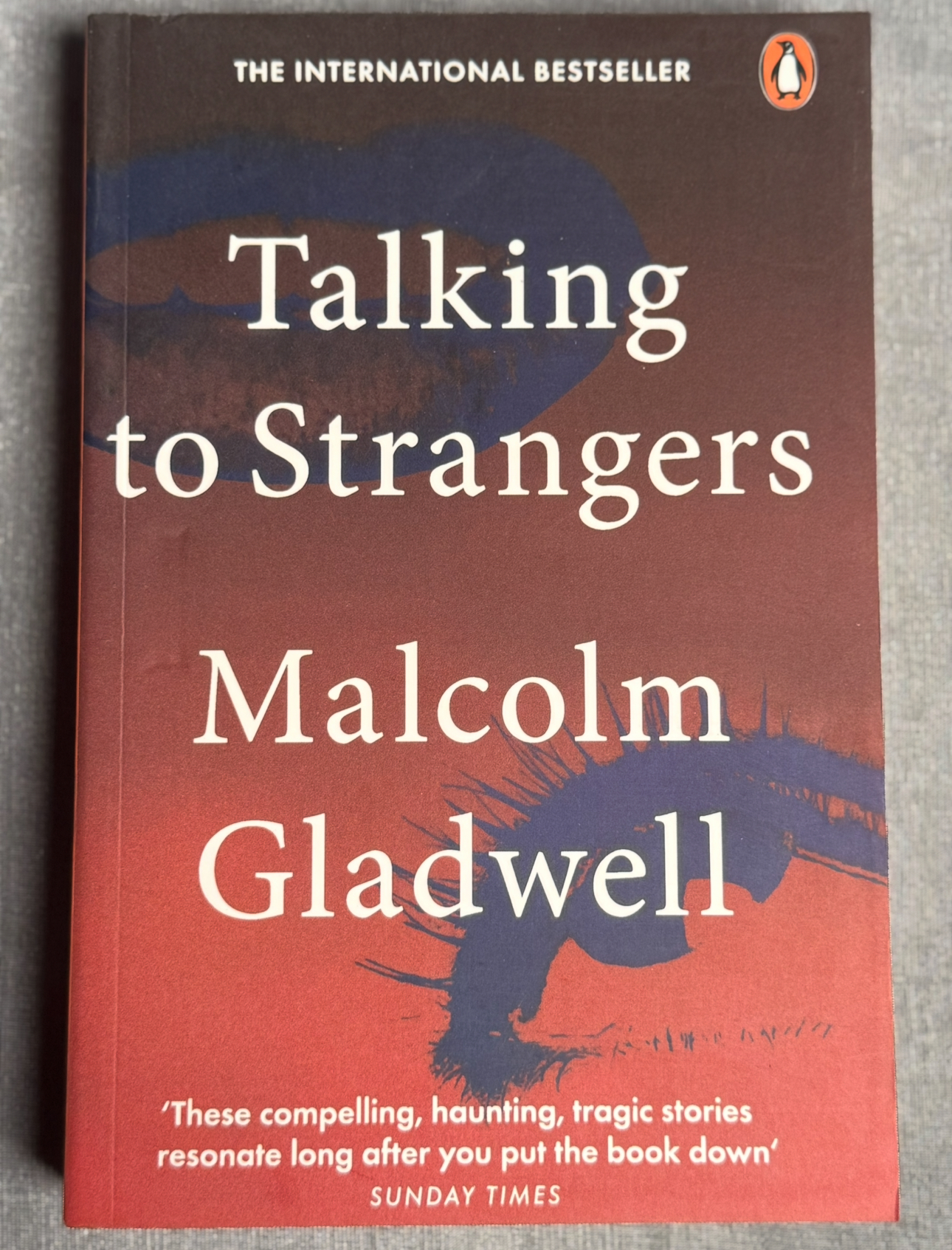
Talking to Strangers: What We Should Know About the People We Don’t Know by Malcolm Gladwell is a compelling exploration of how and why we misunderstand people we have never met. Gladwell argues that our instincts for interpreting strangers are deeply flawed because we default to truth—an assumption that people are honest and straightforward unless proven otherwise. This tendency, while useful for social cooperation, often leads to miscommunication, misjudgment, and in some cases, serious consequences.
Through a series of real-world case studies, including the tragic dying in police custody of Sandra Bland, the wrongful suspicion of Amanda Knox, and the long-undetected espionage of Ana Montes, Gladwell shows how misreading intentions and behaviors can lead to disastrous or surprising results. He draws on psychological research, cultural psychology, and historical examples to explain why humans are poor at detecting deception, overestimate transparency in others’ emotions, and jump to conclusions based on superficial cues.
Gladwell’s work challenges readers to rethink how they approach unfamiliar people, urging more humility, restraint, and contextual awareness when interacting with strangers. Rather than providing a simple set of rules, the book helps reveal the limits of our social intuition and encourages a more thoughtful, empathetic mode of communication in a world where interactions with strangers are unavoidable.









Reviews
There are no reviews yet.